
Buddy Clocking in South Africa: What It Is, How Much It Costs Your Business, and How to Prevent It
Most businesses monitor stock losses carefully.
Many monitor fuel consumption.
Some even track stationery.
Yet one of the biggest hidden costs often goes unnoticed every single day: inaccurate employee timekeeping.
Whether intentional or accidental, incorrect clocking practices can quietly increase payroll expenses month after month. One of the most common examples is known as buddy clocking.
For businesses employing hourly workers, shift teams, warehouse staff, factory employees, security personnel, or contractors, understanding buddy clocking can significantly improve payroll accuracy and operational efficiency.
What Is Buddy Clocking?
Buddy clocking occurs when one employee records attendance on behalf of another.
Examples include:
- Clocking in for a colleague who has not yet arrived.
- Clocking out for someone who has already left.
- Using another employee’s access card.
- Sharing PIN codes.
- Signing attendance registers for absent workers.
While it may seem like a harmless favour between colleagues, it can quickly become a costly form of payroll fraud.
Why Manual Attendance Systems Are Vulnerable
Traditional attendance methods depend heavily on trust.
Examples include:
- Paper registers
- Clock cards
- Swipe cards
- PIN-based terminals
These systems often cannot verify who actually performed the clocking action.
As businesses grow, manually auditing attendance records becomes increasingly difficult.
The Real Cost of Time Theft
A few extra minutes may not sound significant.
However, consider this example:
Twenty employees each receive ten minutes of unearned paid time every working day.
That equals:
- 200 minutes per day
- Over 16 hours each week
- More than 800 payroll hours every year
Across multiple sites or shifts, the financial impact can become substantial.
Beyond payroll, inaccurate attendance data also affects overtime calculations, scheduling, productivity reporting, and workforce planning.
Industries Most at Risk
Buddy clocking can occur in almost any workplace, but it is particularly common where:
- Shift work is common
- Large workforces operate simultaneously
- Employees enter through shared access points
- Manual attendance records are still used
- Multiple sites are managed remotely
Industries include:
- Manufacturing
- Warehousing
- Logistics
- Construction
- Security services
- Retail
- Hospitality
- Healthcare
- Mining
Why Biometrics Make a Difference
Biometric time and attendance systems verify identity using unique physical characteristics.
These may include:
- Fingerprint recognition
- Facial recognition
- Finger vein technology
- Palm recognition
Unlike cards or PIN numbers, biometric identifiers cannot easily be shared between employees.
This dramatically reduces opportunities for buddy clocking.
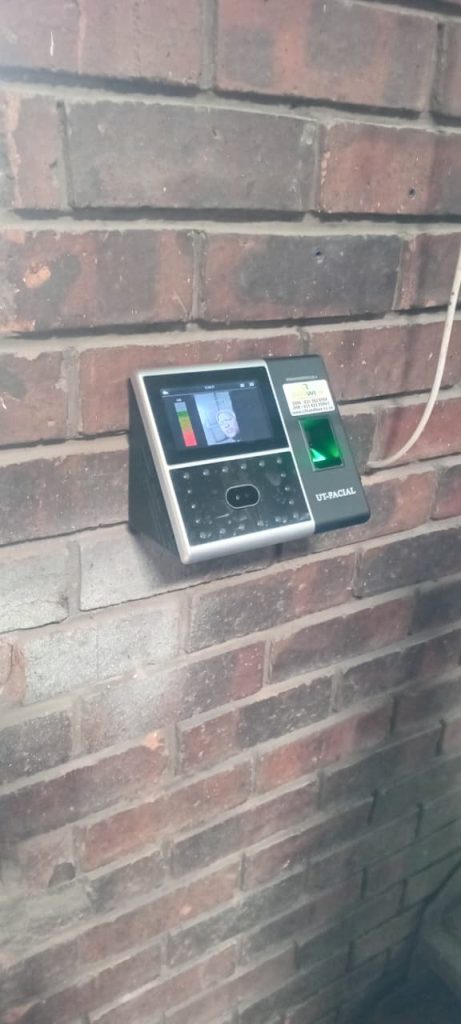
UltraSafe SA supplies biometric fingerprint and facial recognition systems designed specifically to eliminate buddy clocking while improving attendance accuracy. (ultrasafesa.co.za)
Additional Benefits Beyond Preventing Fraud
Businesses often discover unexpected advantages after upgrading their attendance systems.
These include:
Improved Payroll Accuracy
Attendance data can be exported directly into payroll workflows, reducing manual calculations and administrative errors.
Better Shift Management
Managers gain greater visibility into:
- Late arrivals
- Early departures
- Overtime
- Absenteeism
- Shift coverage
Real-Time Reporting
Modern systems provide immediate access to attendance information, allowing supervisors to respond quickly when staffing levels change unexpectedly.
Increased Accountability
When attendance records are accurate and transparent, workplace disputes regarding hours worked become easier to resolve.
Does Biometric Attendance Raise Privacy Concerns?
Many employers ask whether fingerprint systems store actual fingerprint images.
Modern commercial biometric systems generally convert fingerprint characteristics into encrypted mathematical templates rather than storing an image that can simply be viewed or printed.
Businesses should still ensure that attendance systems are implemented in accordance with South Africa’s Protection of Personal Information Act (POPIA), including appropriate employee notification, secure storage practices, and limited access to personal information.
Choosing the Right Time and Attendance Solution
Every workplace is different.
Important considerations include:
- Number of employees
- Number of sites
- Indoor or outdoor installation
- Network connectivity
- Integration with payroll software
- Access control requirements
- Future business growth
UltraSafe SA offers solutions ranging from traditional clock card machines to biometric fingerprint, facial recognition, and integrated access control systems, allowing businesses to select a system that matches their operational needs.
Accurate Attendance Starts With Accurate Identification
Payroll is one of the largest operating expenses for most organisations.
Ensuring employees are paid correctly protects both the business and its workforce.
By replacing vulnerable attendance methods with secure biometric technology, businesses can reduce payroll inaccuracies, improve accountability, simplify workforce management, and minimise the hidden costs associated with buddy clocking.