
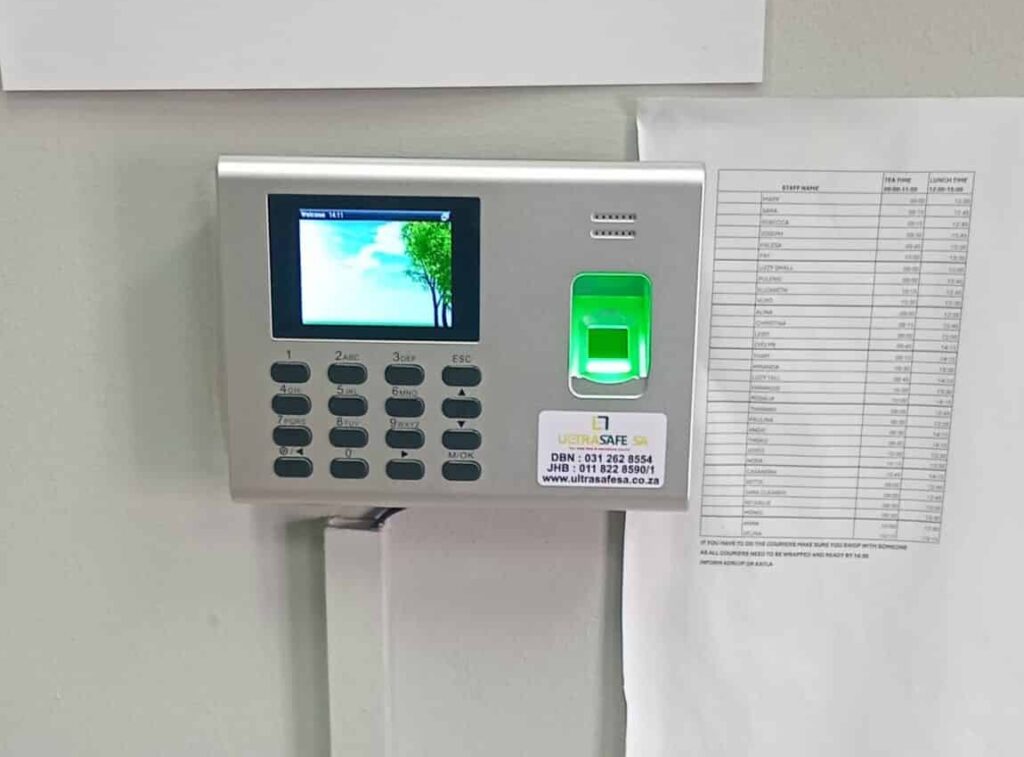
POPIA Biometric Attendance: How to Keep Your Workplace Compliant in 2026
If you run a business in Germiston, you may rely on clocking systems to manage employee shifts, record working hours, improve payroll accuracy, and control access to your facility. Fingerprint readers and facial recognition systems have increasingly replaced traditional paper sign-in sheets and punch cards because they offer faster and more reliable verification.
However, biometric attendance also comes with important privacy responsibilities. Under South Africa’s Protection of Personal Information Act (POPIA), biometric information is treated as special personal information, meaning businesses need to take appropriate steps when collecting, processing, storing, and disposing of it.
Implementing a POPIA biometric attendance system therefore involves more than installing a fingerprint scanner or facial recognition terminal. Businesses need to consider why the information is being collected, how employees are informed, how records are secured, who can access them, and how long they should be retained.
With the right processes and technology in place, businesses can benefit from accurate time tracking and stronger workplace security while taking employee privacy seriously.
What POPIA Means for Employee Fingerprint and Facial Recognition Systems
POPIA places additional requirements around the processing of biometric information, including fingerprints and information used for facial recognition. Because biometric characteristics are closely connected to an identifiable individual, businesses need to apply appropriate safeguards when using them for workplace attendance or access control.
When implementing a POPIA biometric attendance system, an employer generally acts as the responsible party and must ensure that the processing of employee information is carried out in accordance with POPIA’s requirements.
It is also important to understand how modern biometric systems actually work. Some attendance terminals do not simply store a photograph of a face or a complete fingerprint image. Instead, they may convert recognised characteristics into a biometric template that is used for verification.
However, the fact that a system stores a template rather than a conventional photograph does not automatically remove POPIA obligations. If the information can be linked to an identifiable employee, it still needs to be appropriately protected.
This makes the choice of hardware and software particularly important. Businesses should consider systems with appropriate security controls, restricted administrator access, secure communications, and effective methods for managing employee profiles.
Essential Steps for Implementing Compliant Biometric Attendance
Creating a reliable and privacy-conscious attendance system does not need to be complicated. The process starts with understanding the purpose of the system and establishing clear procedures for handling employee information.
1. Establish a Clear Purpose
Businesses should be able to explain why biometric attendance is being used and why it is appropriate for their particular workplace.
For example, a company may need reliable employee verification for accurate timekeeping, payroll administration, access control, or security at an industrial facility or warehouse.
The purpose should be clearly defined rather than collecting biometric information simply because the technology is available.
2. Inform Employees About the System
Transparency is an important part of responsible information processing.
Employees should receive appropriate information about the biometric attendance system, including what information is collected, why it is required, how it is used, who may access it, and how it is protected.
Businesses should also make sure their internal policies and employee communications accurately reflect how the technology operates.
3. Protect Stored Information
Biometric information should be protected against unauthorised access, loss, damage, or disclosure.
Businesses should assess the security features of their attendance hardware and management software, including encryption, administrator permissions, secure network communications, authentication controls, and audit capabilities.
Access to biometric information should be limited to authorised individuals who require it for legitimate business purposes.
4. Establish Retention and Disposal Procedures
POPIA does not simply mean that biometric information should be kept indefinitely because it may be useful in the future.
Businesses should establish appropriate retention procedures based on the purpose for which the information was collected and any applicable legal or operational requirements.
When an employee leaves the organisation, their biometric profile should be removed or securely disposed of when there is no longer a lawful reason to retain it.
A well-managed attendance platform should make it practical for administrators to deactivate employees and remove their profiles from connected systems where appropriate.
Common Biometric Data Pitfalls for Germiston Businesses
Privacy problems are not always caused by intentional misuse. In many workplaces, they result from outdated equipment, weak administrative procedures, or a lack of clear policies.
One potential problem is continuing to use older biometric readers that no longer receive appropriate security updates. Businesses should periodically review their hardware and software to determine whether it remains suitable for the sensitivity of the information being processed.
Another concern is third-party access. If an external company maintains the attendance system, provides technical support, or hosts information on behalf of the business, the organisation should understand what information that service provider can access and ensure appropriate contractual and security arrangements are in place.
Administrator permissions should also be reviewed regularly. Former employees, contractors, or staff members who have changed roles should not continue to have unnecessary access to biometric attendance records.
Finally, businesses should avoid treating employee consent as the only consideration. POPIA provides different lawful grounds for processing personal information, and the appropriate basis depends on the circumstances. Employers should consider the purpose, necessity, applicable legal requirements, and their obligations under POPIA when determining how biometric information may be processed.
Choosing the Right Biometric Attendance Technology
Replacing an outdated clocking system can be an opportunity to improve both workplace efficiency and information security.
Modern biometric attendance technology can provide fast employee verification while helping businesses reduce problems such as buddy-clocking and inaccurate manual time records. Facial recognition and fingerprint systems can also integrate with access control and time-and-attendance platforms, creating a more streamlined workplace management process.
When evaluating equipment, businesses should consider features such as:
- Secure biometric template management
- Encryption and secure data transmission
- Role-based administrator permissions
- Audit trails and activity monitoring
- Reliable employee profile management
- Integration with payroll or time-and-attendance software
- Secure removal or deactivation of former employees
- Tamper-resistant hardware
- Regular firmware and software updates
Technology alone does not guarantee POPIA compliance. A secure system needs to be supported by appropriate workplace policies, access procedures, employee communication, and responsible data-management practices.
For businesses in Germiston and the surrounding East Rand industrial areas, working with an experienced security provider can help ensure that attendance technology supports both operational requirements and broader workplace security.
How Biometric Attendance Can Support Workplace Security
Biometric attendance systems can do more than record employee working hours.
When integrated with access control, businesses can use verified identities to manage entry to specific areas of a facility. This can be particularly useful for warehouses, manufacturing environments, offices, and other sites where controlling who enters and exits the premises is important.
A properly configured system can help businesses:
- Improve the accuracy of employee time records
- Reduce buddy-clocking
- Manage employee access permissions
- Keep clearer attendance records
- Improve accountability at entry points
- Integrate attendance with wider security systems
- Remove access when employee roles change
The key is to implement these capabilities responsibly while ensuring that biometric information is processed securely and for appropriate purposes.
Frequently Asked Questions
Is biometric time tracking legal under POPIA in South Africa?
Yes, biometric time tracking can be used legally in South Africa, provided the processing complies with POPIA and other applicable legal requirements. Businesses need to consider the purpose and necessity of collecting biometric information, provide appropriate transparency, implement suitable security safeguards, and follow the applicable rules around retention and disposal.
Do employees have to consent to a POPIA biometric attendance system?
Consent is not necessarily the only lawful basis for processing personal information under POPIA. The appropriate legal basis depends on the circumstances and the purpose of the processing. Employers should therefore assess the specific requirements applicable to their workplace rather than assuming that employee consent is always required or that it can simply be ignored.
Regardless of the legal basis, businesses should communicate clearly with employees about how the biometric attendance system works and how their information is handled.
How should biometric attendance information be protected?
Businesses should implement appropriate technical and organisational safeguards based on the risks involved. These can include encryption, restricted administrator access, secure authentication, network security, system monitoring, controlled retention, and secure disposal procedures.
The specific security measures should be appropriate to the nature and sensitivity of the information being processed.
What happens if an old clocking device retains an employee’s biometric information?
Businesses should have procedures for deactivating employees and removing or securely disposing of biometric information when it is no longer required for a lawful purpose.
This is particularly important when replacing old attendance equipment. Before disposing of or repurposing a biometric terminal, businesses should determine whether employee profiles remain stored on the device and ensure that sensitive information is securely removed.
Moving Forward With Confidence
A modern attendance system can improve accuracy, accountability, and workplace security without compromising responsible information management.
For businesses using POPIA biometric attendance technology in Germiston, compliance should be considered alongside the selection and installation of the equipment itself. Clear policies, appropriate security controls, restricted access, employee transparency, and responsible data retention all form part of a well-managed system.
Whether you are replacing an outdated clocking terminal, introducing biometric attendance for the first time, or integrating time tracking with your existing access control system, choosing the right technology and implementation approach can make a significant difference.
Looking to upgrade your workplace time-and-attendance or access control system in Germiston? Contact ULTRASAFE SA to discuss reliable business security solutions designed around your facility’s operational requirements.